
Vertical Deep-Dives
InsurTech AI: Automating Underwriting, Claims, and Policy Administration
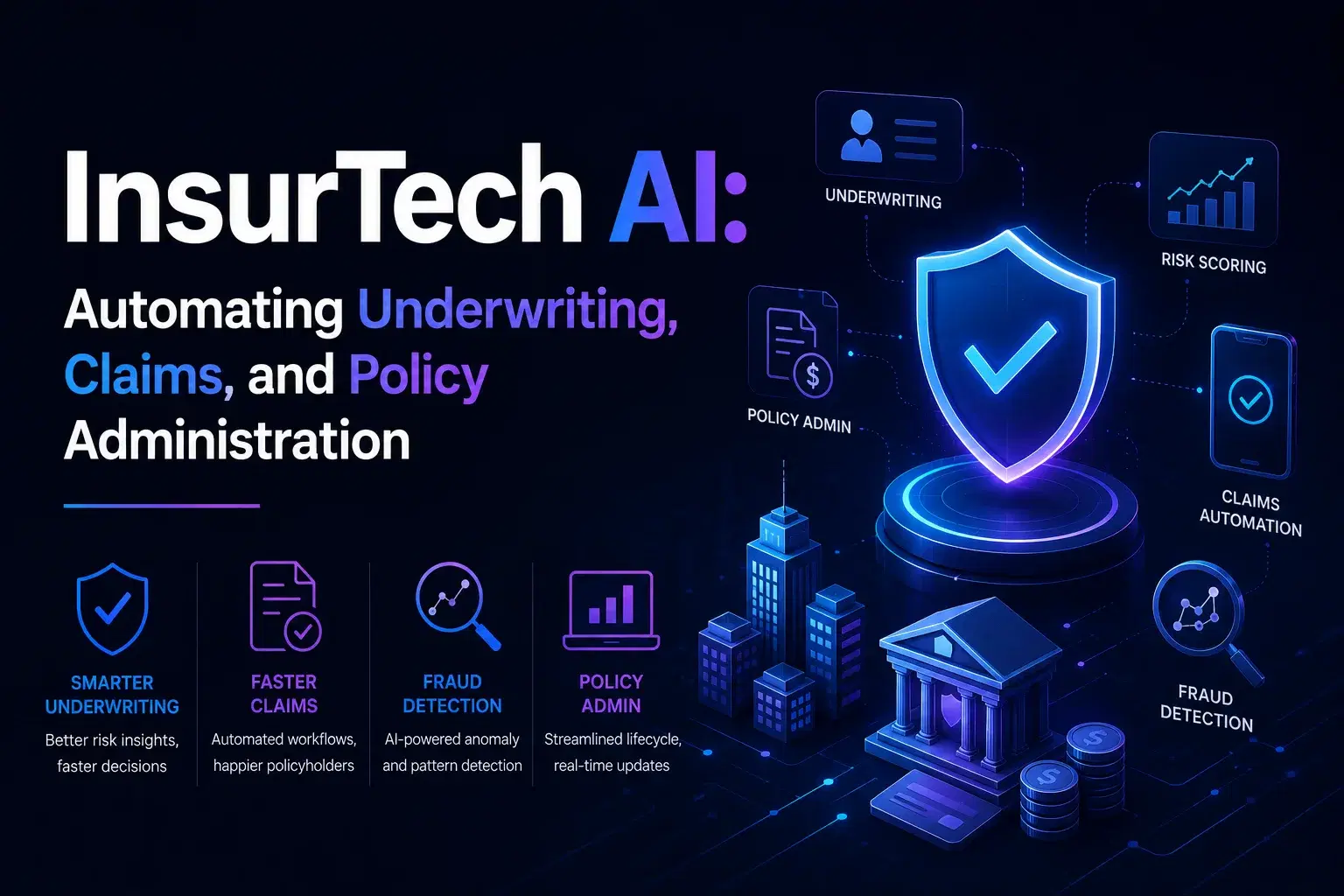
Insurance runs on data and decisions. AI can make both faster and more consistent—if the models are explainable, the data is governed, and regulators can audit every decision.
Related work
Production builds that connect to this topic—open a case study or jump to our portfolio.

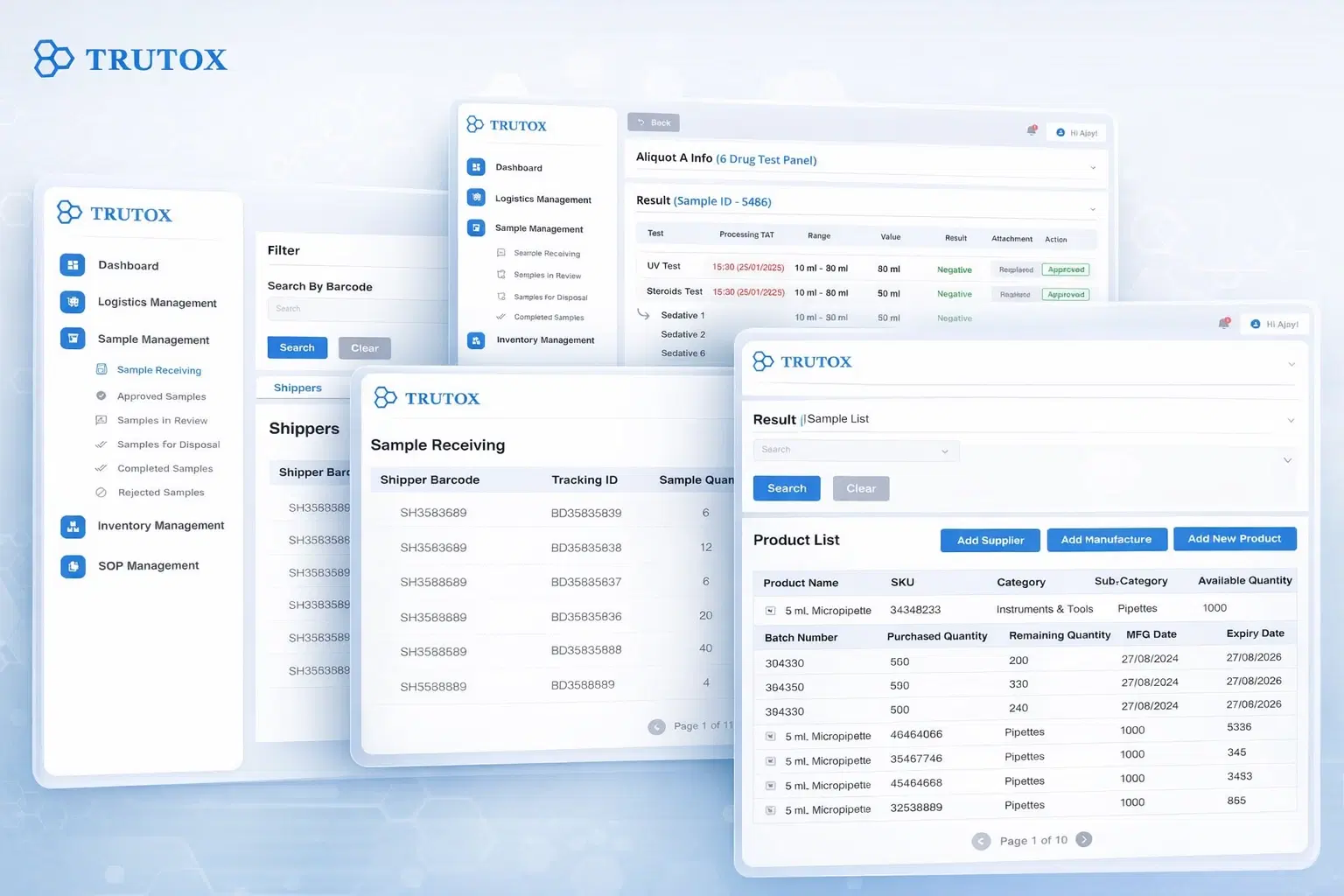
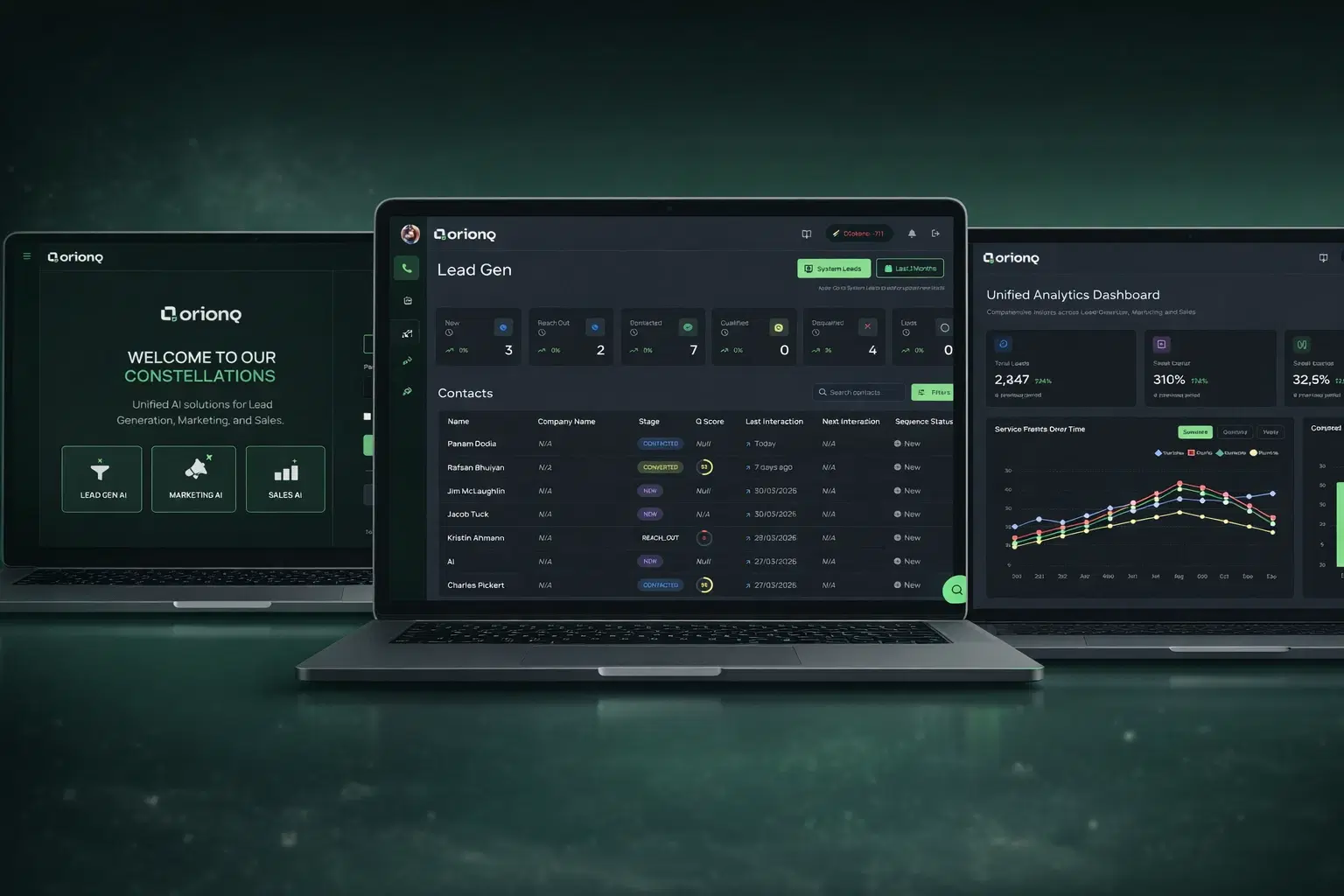
Insurance is fundamentally a data business: collecting risk signals, pricing them accurately, and paying valid claims quickly. AI improves all three stages—but insurance AI deployment is complicated by heavy regulation, adverse selection risk, and the catastrophic consequences of systematic model errors. In 2026, the InsurTech leaders are not deploying AI to replace underwriters—they are deploying it to give underwriters cleaner data and decision-ready analysis, while automating the 60–70% of claims and policies where the decision is clear-cut.
Insurance AI entity definitions
- Underwriting automation: AI-driven risk assessment and pricing for new and renewal policies—ranging from full straight-through processing (STP) for simple lines to AI-assisted triage for complex commercial risks.
- Claims adjudication: the process of evaluating a claim's validity, coverage applicability, and settlement amount—fully automatable for routine claims (minor auto damage, simple property), AI-assisted for complex or high-value claims.
- First Notice of Loss (FNOL): the initial claim submission—AI can extract incident details, classify the claim type, initiate investigation workflows, and set reserves within minutes of submission.
- Policy Administration System (PAS): the core platform managing policy lifecycle (quote, bind, endorse, renew, cancel). AI integration into PAS enables real-time pricing updates, automated endorsements, and proactive renewal optimization.
- Parametric insurance: policies that pay out automatically when a predefined index (rainfall level, wind speed, earthquake magnitude) triggers, without requiring a traditional claims investigation—natively AI-compatible.
AI underwriting: from weeks to seconds
Commercial underwriting for complex risks (professional liability, cyber, D&O) has traditionally required weeks of manual data gathering, actuarial analysis, and underwriter judgment. AI compresses the data gathering phase—pulling public company filings, credit reports, claims history from bureau databases, social media sentiment, and telematics data—into a pre-underwriting report that arrives in minutes rather than days. The underwriter's cognitive effort shifts from data assembly to judgment on the synthesized analysis.
| Line of business | Automation potential | AI application | Underwriter role remaining |
|---|---|---|---|
| Personal auto | 85–95% STP for standard risks | Telematics scoring + bureau data + predictive model | Complex risks, appeals, unusual vehicles |
| Homeowner / property | 70–85% STP for standard risks | Aerial imagery AI + geocode risk + claims history | High-value, commercial property, catastrophe zones |
| SME commercial | 40–65% STP | Financial data extraction + industry risk profiling | Policy customization, large accounts |
| Cyber insurance | 20–40% STP | Attack surface scanning + security controls assessment AI | Most accounts require underwriter judgment |
| Complex liability / D&O | 5–15% STP | Company data aggregation + risk signal flagging | Underwriter owns decision with AI as assistant |
Claims automation: speed, accuracy, and fraud detection
The claims lifecycle—FNOL → investigation → adjudication → payment → subrogation—has multiple AI automation points. Fast-track settlement for low-complexity claims (mobile FNOL, AI image analysis of minor auto damage, instant payment) improves customer satisfaction and reduces loss adjustment expense (LAE). For complex claims, AI assembles the investigation file: policy coverage match, reserve estimate, similar claim precedents, and fraud risk score—giving the adjuster a decision-ready package rather than raw documents.
Insurance fraud detection: graph AI and anomaly scoring
Insurance fraud costs the global industry an estimated $80 billion annually. AI fraud detection in insurance uses: anomaly scoring (statistical deviation from expected claim patterns for the policy type and geography), network graph analysis (identifying rings of claimants, providers, and attorneys with suspicious interconnections), natural language analysis of claim narratives (detecting inconsistencies or template-copied language), and temporal pattern detection (claims submitted on specific days, repetitive claim sequences).
Regulatory compliance: the explainability imperative
Insurance AI faces the same explainability requirement as credit AI, plus additional actuarial standards. In the US, state insurance commissioners require rate filings that justify pricing models—black-box AI models cannot be filed in most states without model documentation that satisfies actuarial standard ASOP No. 56 (Modeling). In the EU, GDPR Article 22 and the EU AI Act (insurance AI may be high-risk) require explainable automated decisions. Every underwriting and claims AI system must produce human-readable explanations on demand.
How Silicon Tech Solutions helps
We build InsurTech platforms and AI decisioning systems for carriers, managing general agents (MGAs), and insurtech startups: underwriting engines, claims automation workflows, fraud detection models, and PAS integrations. Our work is designed for regulatory filings and audit readiness—not just demo performance. If you are building insurance AI or modernizing your InsurTech platform, book a scoping session to discuss your use case, data architecture, and regulatory pathway.
Frequently asked questions
Plan your next build with us
Book a working session to review workflows, integrations, or AI architecture—or send a message and we'll respond within one business day.