
Strategic Foundations
AI-First MVP Development: How Startups Ship Agentic Products in 8 Weeks
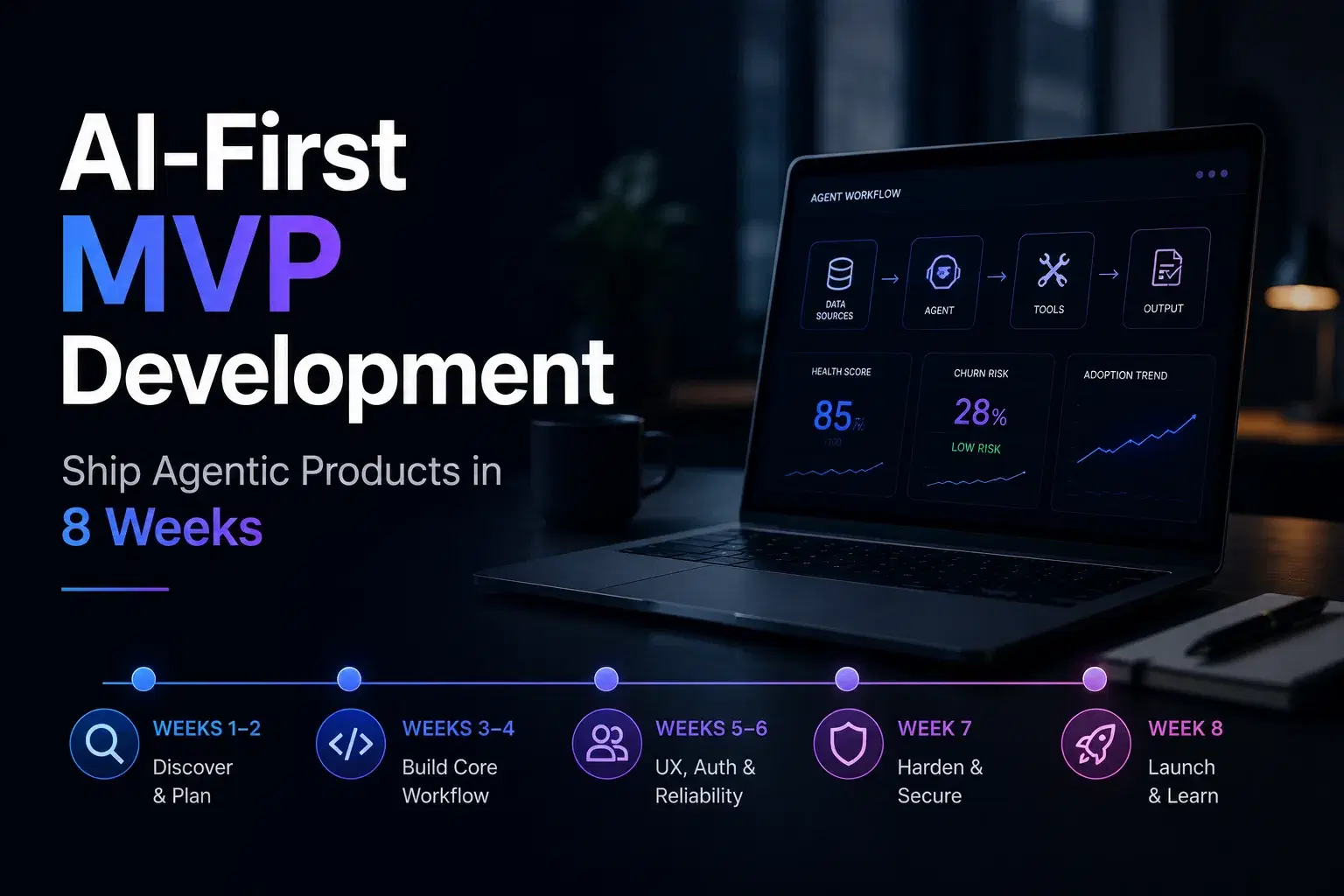
Eight weeks is enough to validate an AI product hypothesis—if you make the right scope decisions from day one. This guide covers the architecture, sprint model, and production gates that separate shipped MVPs from eternal prototypes.
Related work
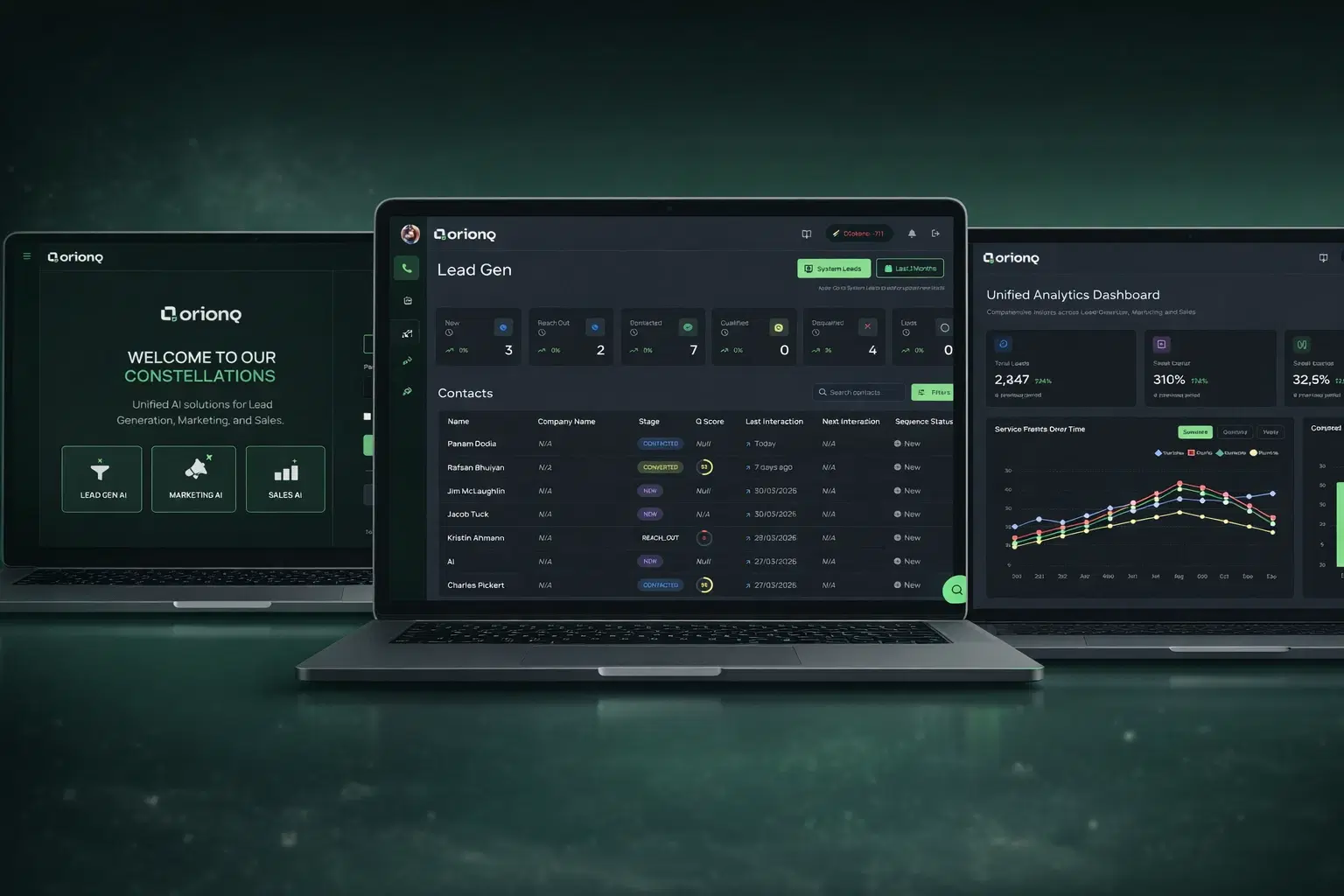
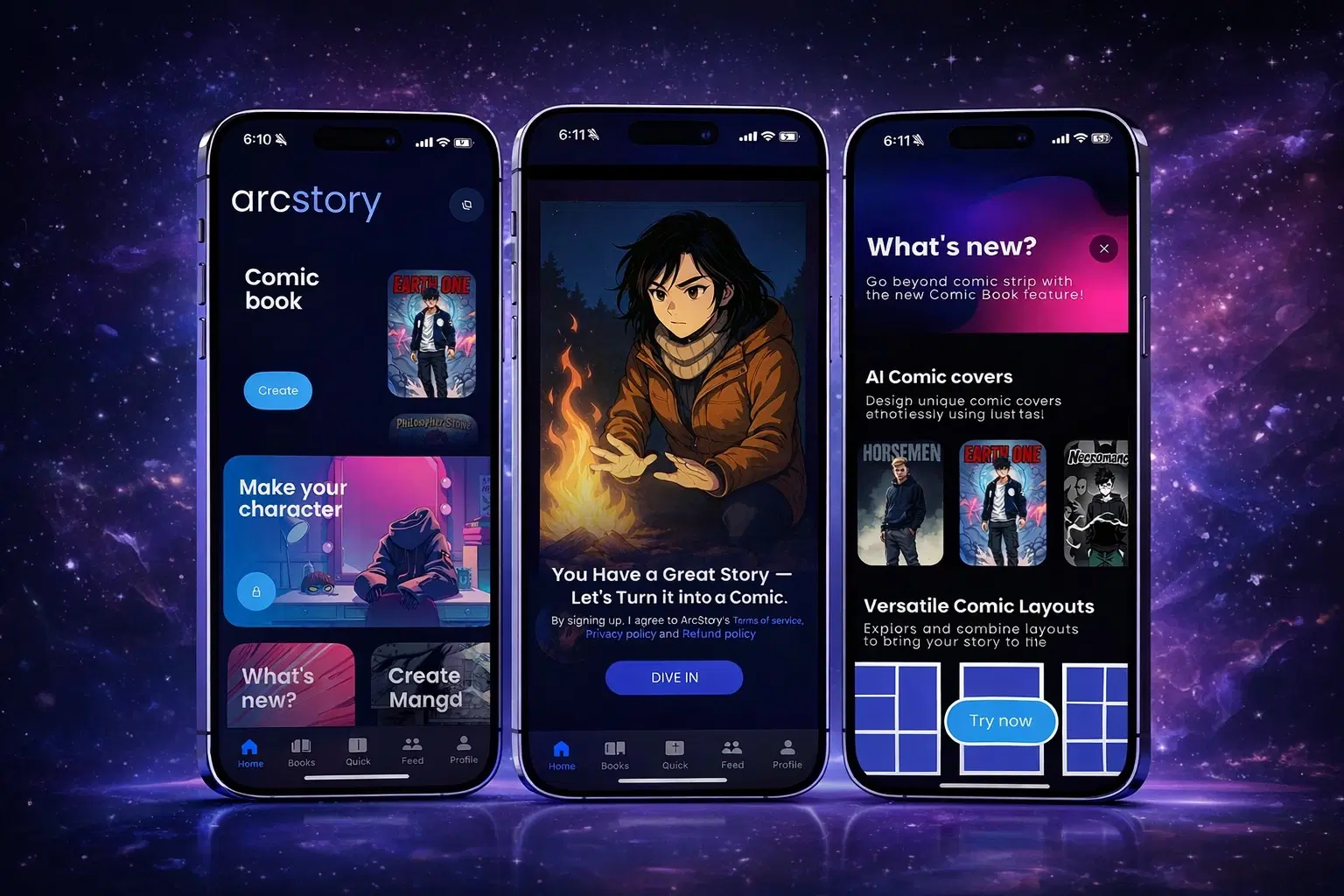
Production builds that connect to this topic—open a case study or jump to our portfolio.

The AI startup landscape in 2026 has bifurcated into two cohorts: teams that ship quickly and discover what customers actually want, and teams that spend six months architecting a system nobody uses. The difference is not engineering talent—it is MVP discipline applied to AI products. This guide is for founders and product leads who want to validate an AI product hypothesis in 8 weeks with a system that can survive early production traffic.
The most important decision: what NOT to build in week 1
AI MVPs fail most often from over-scoping, not under-scoping. The 8-week constraint forces ruthless prioritization. Before writing a line of code, define: (1) the single workflow the MVP will complete end-to-end; (2) the user persona and their success metric; (3) the minimum data and integration requirements; (4) what 'good enough' quality looks like for launch. Everything outside this scope is post-launch backlog.
Minimum viable agent architecture
- LLM backbone: choose one model and version for the MVP—do not build model-agnostic abstraction layers until you know what you need.
- Tool set: define the 2–5 tools your agent needs (search, database query, API call, form submission)—not the 20 tools you might want someday.
- Retrieval: if your product needs domain knowledge, implement basic RAG with 1–3 document sources—defer multi-source, real-time indexing.
- Auth and identity: integrate your target platform's SSO from day one—retrofitting auth on a launched product is painful.
- Evaluation baseline: define 20–50 golden test cases before launch—this is your regression harness for post-launch model changes.
The 8-week AI MVP sprint model
| Weeks | Focus | Deliverable | Production gate |
|---|---|---|---|
| 1–2 | Discovery + architecture | Workflow map, data contracts, integration inventory, golden eval set | Scope sign-off with customer proxy |
| 3–4 | Core agent + integrations | Agent can complete the primary workflow in dev environment | Internal eval: >70% golden test pass rate |
| 5–6 | Auth, UX, and reliability | User-facing product with login, basic UI, error handling, logging | End-to-end demo with 3+ real users |
| 7 | Hardening + evaluation | Guardrails, PII handling, prompt injection tests, load test | Security review, production deployment |
| 8 | Launch + measure | Launched to first cohort, analytics instrumented, feedback loop active | Weekly eval run against golden set |
The 2026 AI startup tech stack (pragmatic choices)
Tool choices should optimize for speed-to-production and community support—not novelty. In 2026, the pragmatic starter stack for most AI SaaS MVPs is: Next.js or FastAPI for the application layer, a hosted LLM API (Anthropic, OpenAI, or regional equivalent) with BAA if healthcare, a managed vector store for RAG, Supabase or Postgres for structured data, Vercel or Railway for hosting, and PostHog or Amplitude for analytics. Resist the temptation to self-host models until you have evidence that hosted APIs are the bottleneck.
AI MVP anti-patterns that kill timelines
- Building model-agnostic abstraction before you have shipped one model. Pick one and ship.
- Training custom models before validating that prompt engineering + RAG cannot solve the problem.
- Designing multi-tenant architecture before you have 10 customers. Start single-tenant if it ships faster.
- Waiting for perfect eval metrics before shipping. Ship when it is good enough to learn from—measure, then improve.
- Building admin tooling before building the core product. Users care about the workflow, not the settings page.
From MVP to production: the post-launch architecture decisions
After launch, the prioritization shifts from feature velocity to reliability. The most common post-MVP investments are: multi-tenancy and per-customer data isolation (if initially deferred); observability—tracing agent calls, measuring task success rate, and monitoring model costs; evaluation automation—running the golden set on CI/CD so model updates do not regress quality; and integration depth—connecting to more of the customer's existing systems as you learn what data the agent actually needs.
How Silicon Tech Solutions helps
We are an embedded engineering partner for AI-first startups: we have shipped AI SaaS MVPs, fintech backends, and agentic products across industries in rapid delivery cycles. If you have an AI product idea and need a team that can take it from validated architecture to shipped product—not a PoC graveyard—book a scoping call to discuss your hypothesis, data requirements, and 8-week plan.
Frequently asked questions
Related articles
Why Most Founders Underestimate...
Why Enterprise Customers Ask for Features You Never Planned (And How to Architect for Them Early)
Enterprise buyers rarely reject SaaS products over core workflow features. Deals stall over compliance, security, and identity infrastructure. Learn how to architect for enterprise readiness from day one.
13 min read · SaaS & Product Engineering
Engineering Decisions That Become Expensive Later
Why Most SaaS Products Become Hard to Scale (And It's Usually Not Because of Traffic)
When software velocity hits a brick wall, founders blame infrastructure. But true scalability bottlenecks are hidden inside your database schemas, hardcoded permissions, and tightly coupled business logic.
14 min read · SaaS & Product Engineering
MVP & Product Architecture
The Hard Parts of Building an MVP: Decisions That Become Expensive Later
We’ve watched dozens of products grow. The catastrophic failures rarely happen because of bad business ideas; they happen because early, unchecked tech decisions trap your velocity right when you land your first enterprise pilot.
14 min read · SaaS & Product Engineering
Strategic Foundations
The Great AI SaaS Pricing Crisis: Seats vs. Agents
AI agents are breaking the old SaaS pricing equation. When one autonomous workflow can replace a five-person ops squad, founders need pricing models based on usage, outcomes, and value created—not seats.
9 min read · SaaS & Product Engineering
Vertical Deep-Dives
AI Agents for Customer Success: Reducing Churn and Scaling Retention
Customer success teams are buried in reactive work. AI agents that predict churn, automate health scoring, and draft proactive outreach let CSMs focus on the relationships and decisions that only humans can handle.
13 min read · SaaS & Product Engineering
Decision Framework
AI SaaS vs. Custom Development: Which Path to Digitalization?
Build-everything and buy-everything are both extremes. Most enterprises need a portfolio: SaaS for commodity surfaces, custom for defensible workflows and regulated data.
13 min read · SaaS & Product Engineering
Plan your next build with us
Book a working session to review workflows, integrations, or AI architecture—or send a message and we'll respond within one business day.