
Decision Framework
How to Choose an AI Development Agency: 9 Things to Evaluate in 2026
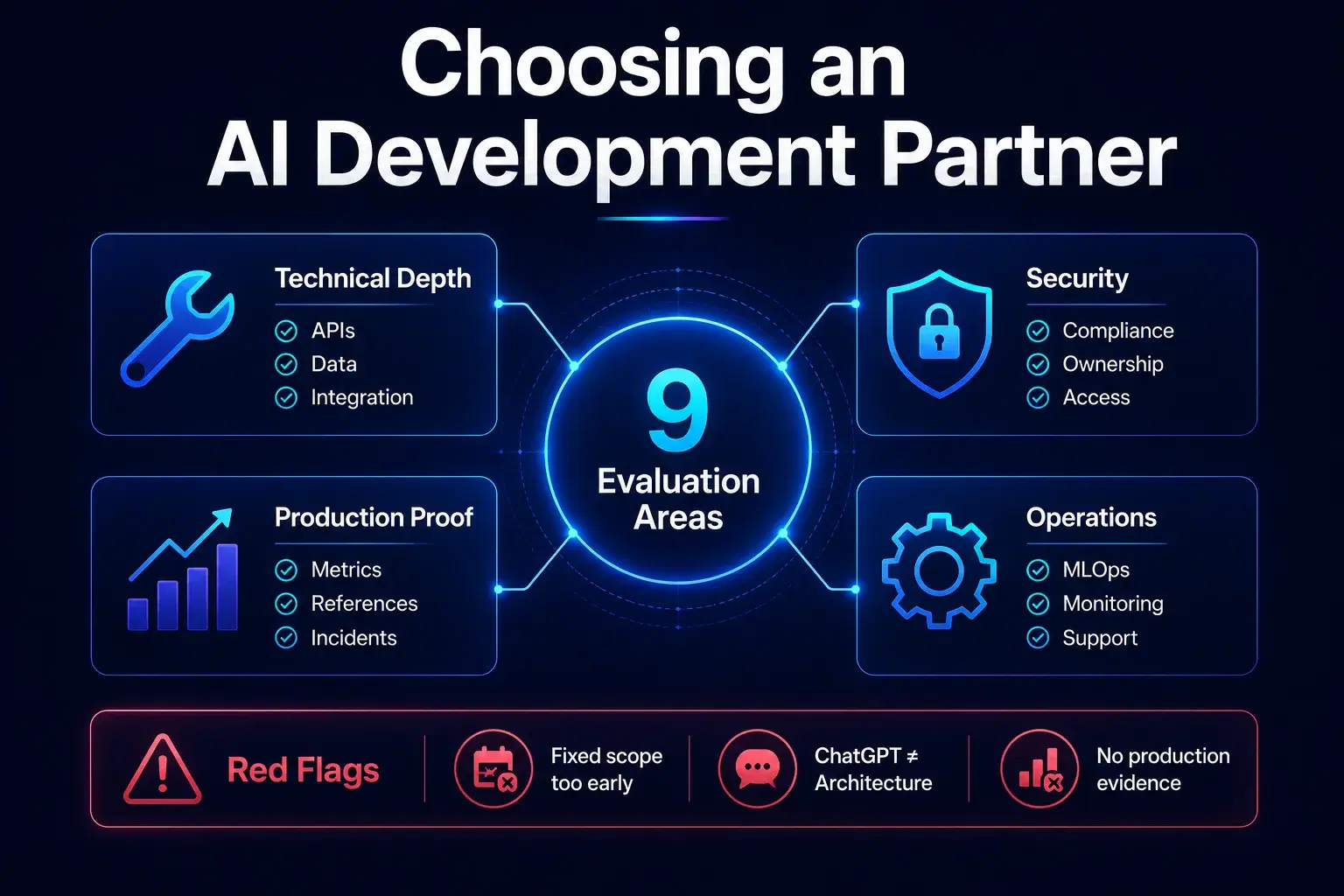
The best partners ship production systems, not endless PoCs. Use a structured scorecard—technical, operational, and contractual—before you sign.
Related work
Production builds that connect to this topic—open a case study or jump to our portfolio.
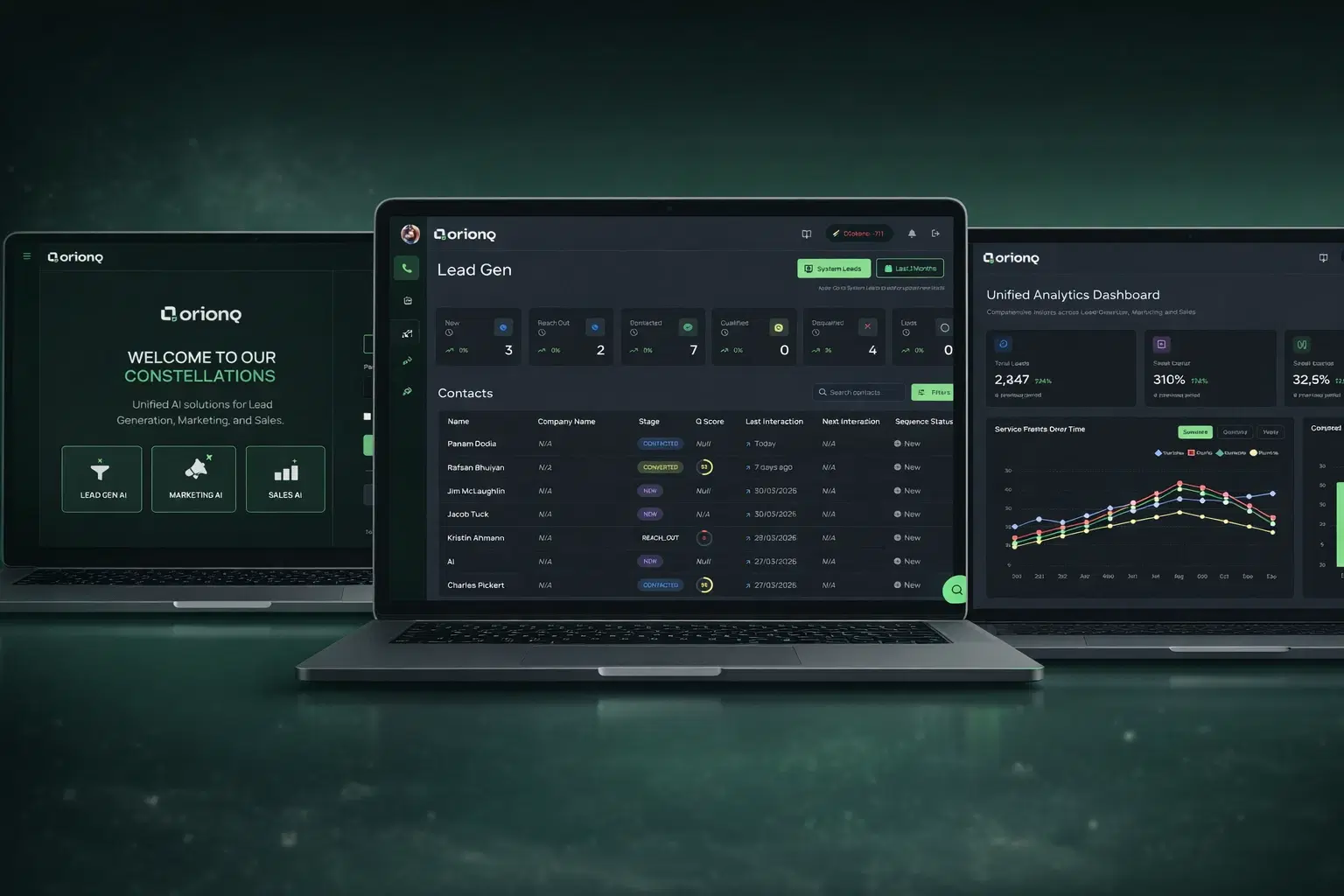
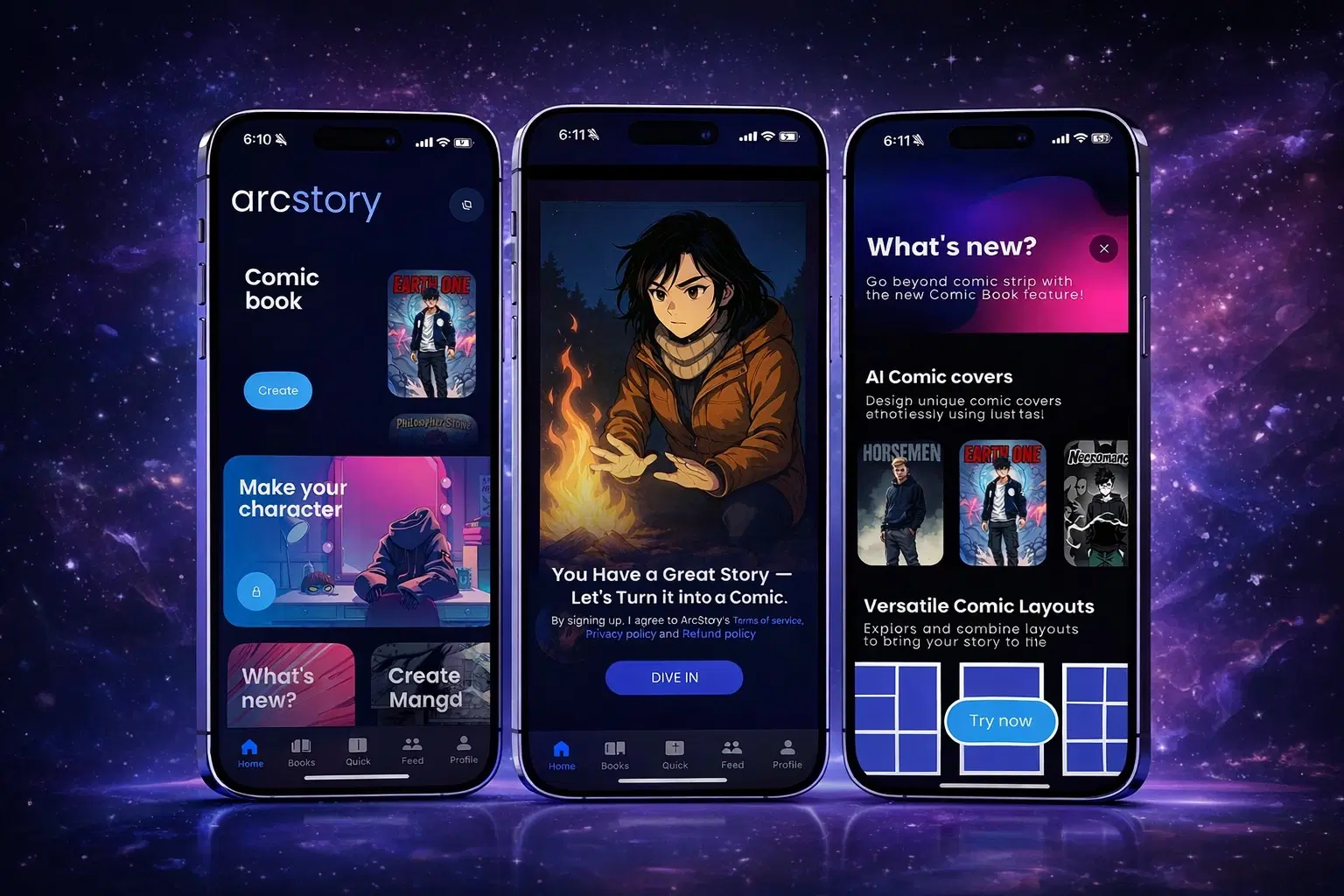

Choosing an AI development agency is a procurement decision with technical depth: you are buying engineering judgment, integration skill, and operational maturity—not a brand or a model API key. The right partner asks harder questions than you expected, refuses unsafe shortcuts, and shows shipped products in environments similar to yours. This checklist helps buyers compare vendors on what actually predicts success.
Nine evaluation dimensions
- Shipped production systems: case studies with metrics, not only demos—ask what broke in production and how they fixed it.
- Technical depth across stack: data pipelines, APIs, auth, observability—not only prompt engineering.
- Evaluation discipline: offline datasets, regression tests, and release processes for model/tool changes.
- Security posture: data handling, tenancy, subprocessors, and incident response aligned to your requirements.
- MLOps and reliability: monitoring, rollback, versioning—not ‘move fast and break production.’
- Domain experience: regulated industries, ERPs, or workflows similar to yours reduce ramp time.
- Delivery model: embedded team vs. ticket shop; who owns on-call after launch?
- IP and data ownership: who owns code, fine-tunes, and derived datasets contractually?
- Post-deployment support: SLAs, change windows, and cost model for maintenance—agents drift; plans shouldn’t.
Red flags (walk away or dig much deeper)
- Fixed timelines and budgets before understanding data access, quality, and integrations.
- Vague answers on where customer data is stored and who can access it.
- ‘We use ChatGPT’ as architecture instead of explicit system design and controls.
- No references willing to discuss production incidents and how they were handled.
A practical scorecard
| Dimension | What ‘5’ looks like |
|---|---|
| Production evidence | References + metrics + incident stories |
| Integration skill | Complex systems connected with tests |
| Security/compliance | Clear answers, documentation, audits |
| Maintainability | Runbooks, ownership, upgrade path |
Why teams work with Silicon Tech Solutions
We operate as an embedded engineering partner: AI products, SaaS platforms, fintech backends, and ops tools—built for production and aligned with SOC 2, ISO 27001, and HIPAA where your roadmap requires it. If you are selecting an AI implementation partner, start with a workflow review and honest scope—we’d rather earn trust with clarity than win with hype.
Frequently asked questions
Related articles
Why Most Founders Underestimate...
Why Enterprise Customers Ask for Features You Never Planned (And How to Architect for Them Early)
Enterprise buyers rarely reject SaaS products over core workflow features. Deals stall over compliance, security, and identity infrastructure. Learn how to architect for enterprise readiness from day one.
13 min read · SaaS & Product Engineering
Engineering Decisions That Become Expensive Later
Why Most SaaS Products Become Hard to Scale (And It's Usually Not Because of Traffic)
When software velocity hits a brick wall, founders blame infrastructure. But true scalability bottlenecks are hidden inside your database schemas, hardcoded permissions, and tightly coupled business logic.
14 min read · SaaS & Product Engineering
MVP & Product Architecture
The Hard Parts of Building an MVP: Decisions That Become Expensive Later
We’ve watched dozens of products grow. The catastrophic failures rarely happen because of bad business ideas; they happen because early, unchecked tech decisions trap your velocity right when you land your first enterprise pilot.
14 min read · SaaS & Product Engineering
Strategic Foundations
The Great AI SaaS Pricing Crisis: Seats vs. Agents
AI agents are breaking the old SaaS pricing equation. When one autonomous workflow can replace a five-person ops squad, founders need pricing models based on usage, outcomes, and value created—not seats.
9 min read · SaaS & Product Engineering
Vertical Deep-Dives
AI Agents for Customer Success: Reducing Churn and Scaling Retention
Customer success teams are buried in reactive work. AI agents that predict churn, automate health scoring, and draft proactive outreach let CSMs focus on the relationships and decisions that only humans can handle.
13 min read · SaaS & Product Engineering
Strategic Foundations
AI-First MVP Development: How Startups Ship Agentic Products in 8 Weeks
Eight weeks is enough to validate an AI product hypothesis—if you make the right scope decisions from day one. This guide covers the architecture, sprint model, and production gates that separate shipped MVPs from eternal prototypes.
13 min read · SaaS & Product Engineering
Plan your next build with us
Book a working session to review workflows, integrations, or AI architecture—or send a message and we'll respond within one business day.