
Vertical Deep-Dives
HIPAA-Compliant AI for Healthcare: Architecture, Risks, and Rollout
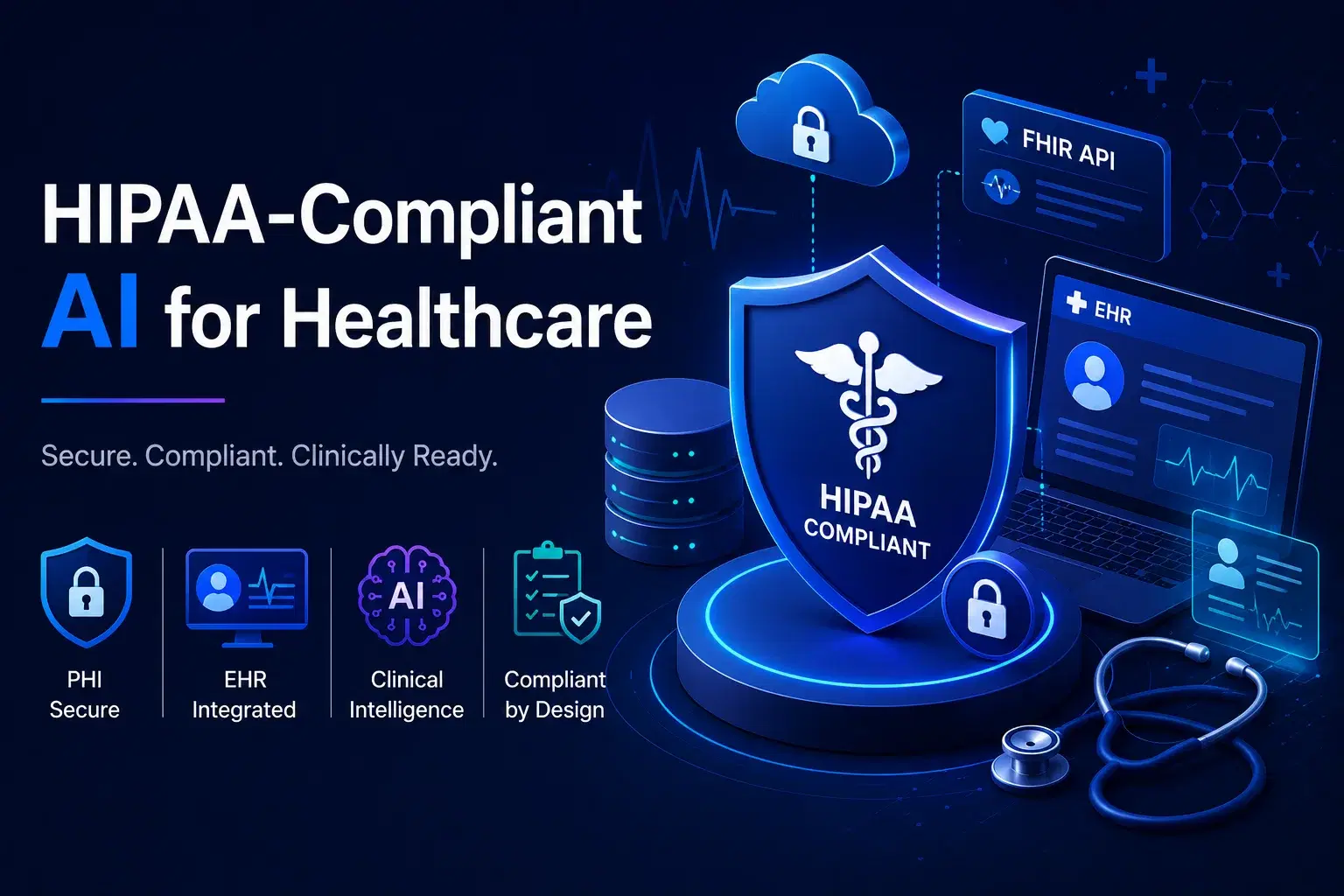
Healthcare AI that cannot pass a compliance review never reaches patients. Building compliant-first means PHI controls, explainability, and clinical workflow integration—not just model accuracy.
Related work
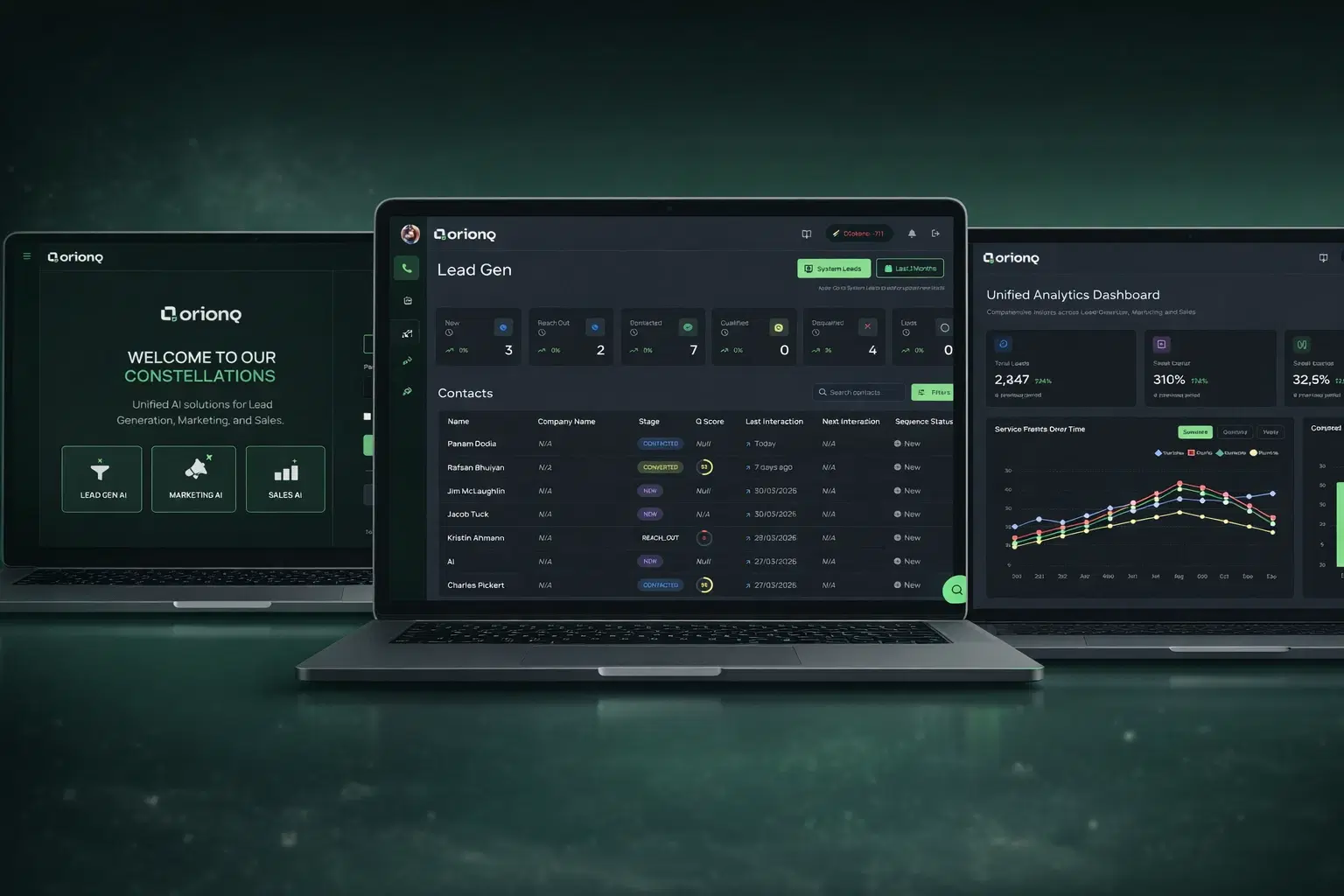
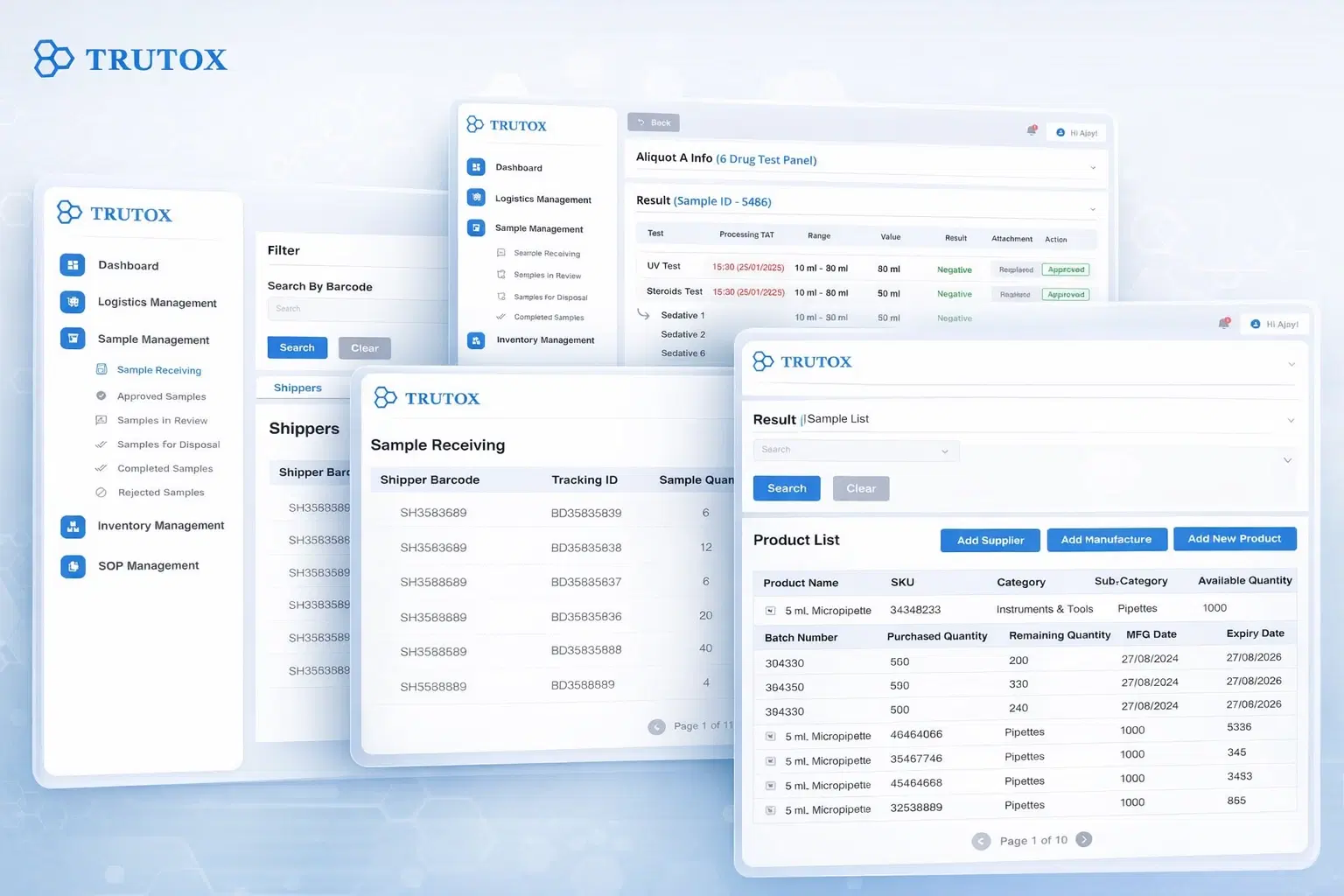
Production builds that connect to this topic—open a case study or jump to our portfolio.

Healthcare AI fails at the compliance stage more often than the technical stage. A model that achieves 97% accuracy on a validation dataset is worthless if it cannot be deployed because PHI governance is missing, the EHR vendor refuses to support the integration, or the AI is classified as a medical device without a regulatory pathway. Building healthcare AI that actually reaches clinical use requires compliance engineering as a first-class concern—starting at architecture, not as an afterthought at procurement.
Key entities every healthcare AI team must define
- Protected Health Information (PHI): any individually identifiable health information—name, dates, geographic identifiers, account numbers, biometric identifiers, and more (18 HIPAA identifiers). PHI cannot be sent to a third-party AI model without a Business Associate Agreement (BAA) in place.
- FHIR (Fast Healthcare Interoperability Resources): the HL7-published API standard for healthcare data exchange. FHIR R4 is the 2026 baseline for EHR integration in the US (ONC-mandated), and widely adopted in the UK, Australia, and Singapore.
- SaMD (Software as a Medical Device): AI that informs, drives, or replaces clinical decision-making—subject to FDA 510(k), De Novo, or PMA clearance in the US, and CE marking under MDR in Europe.
- Clinical Decision Support (CDS): tools that assist clinicians with diagnosis, treatment, or care management. Not all CDS is SaMD—the FDA's 2022 guidance defines criteria for when AI-CDS requires pre-market clearance.
PHI data architecture: where AI models can and cannot go
The fundamental constraint is: PHI cannot transit third-party AI APIs without a BAA. In practice, this means most healthcare AI deployments require one of: (1) using an AI vendor that signs a BAA (AWS, Microsoft Azure, Google Cloud, Anthropic, OpenAI all offer BAAs for healthcare customers); (2) deploying models in a private VPC or on-premise environment where PHI never leaves the boundary; (3) de-identifying data before it reaches the model (HIPAA Safe Harbor or Expert Determination methods).
| Option | Technical approach | Compliance requirement | Use case fit |
|---|---|---|---|
| BAA-covered API | Send PHI to BAA-signed cloud AI API | BAA + DPA in place | Best for speed; still dependent on vendor security posture |
| Private deployment | Self-hosted or VPC model, PHI stays in environment | Internal controls, audit logging | High-sensitivity workloads; higher ops burden |
| De-identification first | Strip 18 HIPAA identifiers before model call | Safe Harbor or Expert Determination method | Analytics, research, training data preparation |
| Federated learning | Train model without centralizing PHI | Local computation, only gradients shared | Multi-site research; high implementation complexity |
HL7 FHIR integration: the EHR connectivity standard
FHIR exposes patient demographics, diagnoses (SNOMED/ICD-10), medications (RxNorm), lab results (LOINC), imaging (DICOM references), and clinical notes as structured API resources. AI agents in healthcare consume FHIR to build patient context: pull problem list, current medications, recent labs, and care team assignments in a single structured request. The challenge is that FHIR conformance varies widely between EHR vendors—Epic, Cerner/Oracle Health, Meditech, and eClinicalWorks each have different extension patterns and completeness levels.
FDA SaMD and when your AI is a medical device
The FDA's Software as a Medical Device guidance classifies AI based on the significance of clinical decisions it affects and the severity of the patient condition. AI that 'drives' a clinical decision (e.g., autonomously outputs a diagnosis for a life-threatening condition) is likely Class II or III SaMD requiring 510(k) or PMA clearance. AI that 'informs' a clinical decision (e.g., surfaces relevant literature or risk factors for clinician review) may qualify as CDS that is exempt from device regulation under the 21st Century Cures Act—if it is not the primary basis for diagnosis.
| AI function | Clinical significance | Likely FDA pathway |
|---|---|---|
| Autonomous radiology read | Diagnoses serious condition without clinician confirmation | Class III PMA or De Novo |
| AI-assisted diagnosis flagging | Surfaces findings; clinician makes final call | Class II 510(k) likely required |
| Clinical decision support | Recommends but does not decide; clinician reviews | Potentially CDS-exempt (21CC Act) |
| Administrative AI | Billing codes, scheduling, documentation | Not a medical device |
A compliant healthcare AI rollout in four phases
- Regulatory mapping: determine if your AI is SaMD, CDS, or administrative—before building. Get legal and regulatory counsel early.
- PHI architecture: define data flows, identify BAA requirements, implement audit logging and access controls for all PHI touchpoints.
- Clinical validation: run prospective validation studies, collect clinician feedback, and document performance by demographic subgroup to detect bias.
- Change management: integrate AI into existing EHR workflows (Epic Best Practice Alerts, Cerner PowerPlan triggers, SMART apps) so clinicians receive AI insights without leaving their workflow context.
How Silicon Tech Solutions helps
We build HIPAA-compliant AI platforms, EHR integrations, and clinical workflow tools for healthcare providers, digital health startups, and medtech companies. Our engineering includes PHI-safe architecture, FHIR API integrations, and evidence-based clinical AI deployment practices. If you are building healthcare AI and need to navigate the compliance-to-production path, book a scoping call with our team.
Frequently asked questions
Related articles
Why Most Founders Underestimate...
Designing Healthcare Platforms That Clinicians Actually Want to Use
Healthcare software often fails because it prioritizes administrative compliance over clinical usability. Learn how to engineer platforms that reduce cognitive load, integrate into EHR workflows, and drive adoption.
12 min read · HealthTech
HealthTech Product Development
The Hard Parts of Building HealthTech Products: Compliance, Workflows, Data, and AI
Successful HealthTech products are not built by adding more features. They are built by understanding clinical workflows, healthcare data, compliance requirements, and where technology creates real value.
10 min read · HealthTech
Healthcare AI Infrastructure
Agentic AI in Healthcare: Beyond Chatbots to Real Clinical Workflow Automation
Healthcare AI is moving beyond chatbots. Discover how agentic AI, ambient clinical documentation, prior authorization automation, and FHIR-native architectures are transforming healthcare operations in 2026.
12 min read · HealthTech
Plan your next build with us
Book a working session to review workflows, integrations, or AI architecture—or send a message and we'll respond within one business day.