
Technical Implementation
Democratizing Data: Natural Language Queries for Business Intelligence
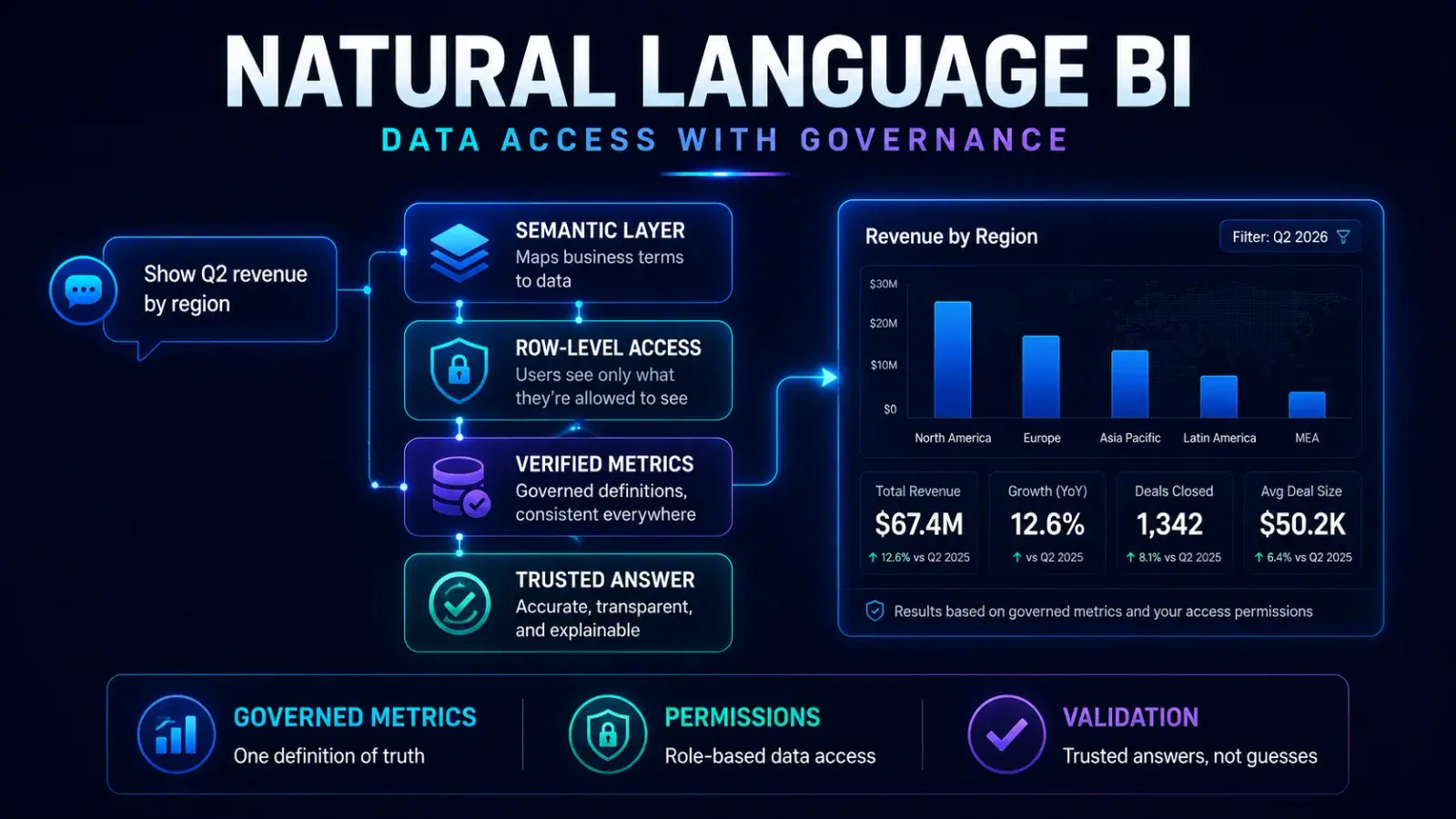
Letting everyone ‘ask anything’ without governance creates wrong answers at scale. The best programs pair natural language with metrics definitions, permissions, and validation—not raw database chat.
Related work
Production builds that connect to this topic—open a case study or jump to our portfolio.
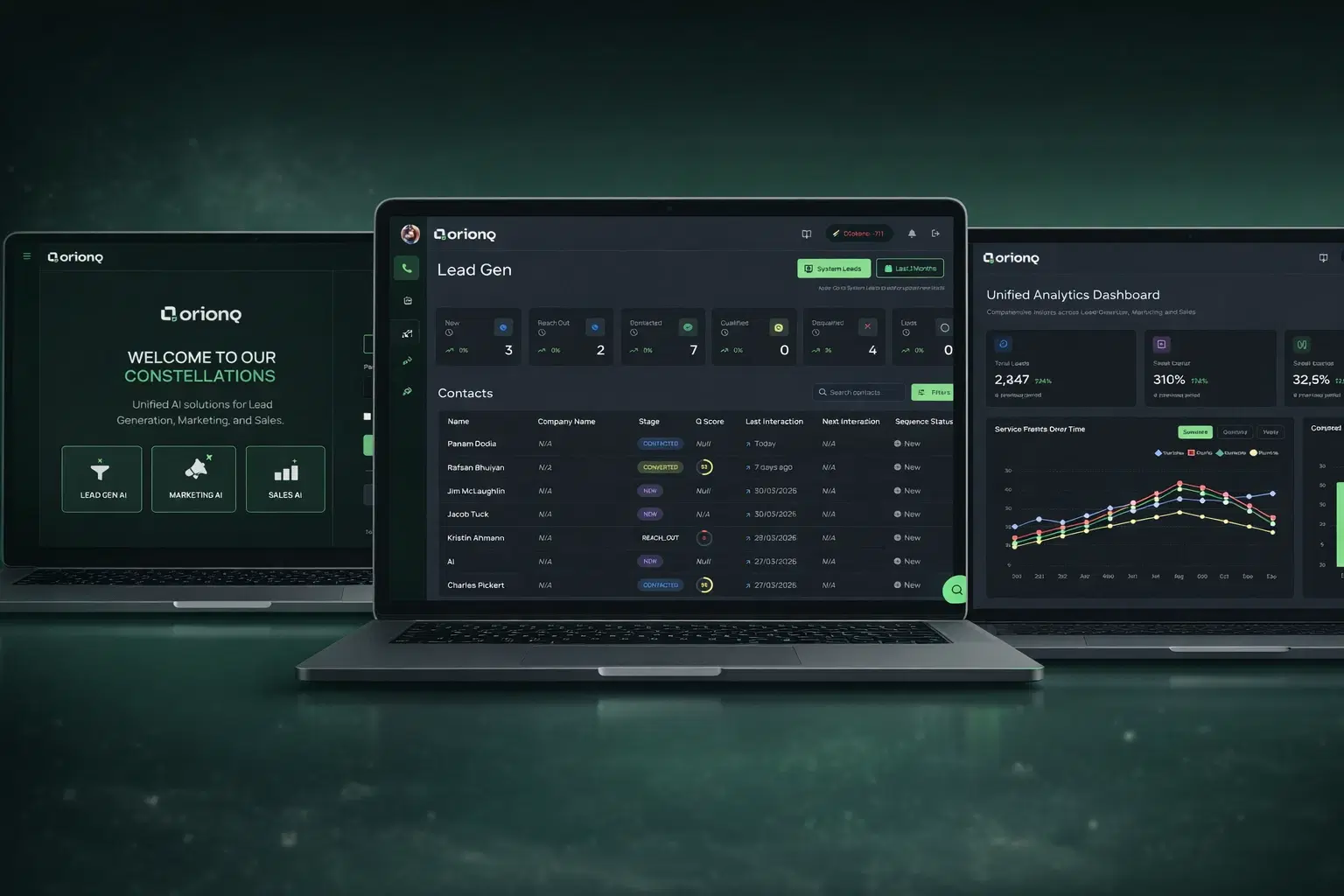


Business intelligence succeeds when people share definitions of revenue, churn, and margin—not when they run ad hoc SQL from ambiguous English. Natural language interfaces can accelerate insight for operators and managers, but only when paired with a semantic layer, row-level security, and validation that prevents confident nonsense. The goal is democratization with guardrails, not chaos with a chat box.
The stack: NL interface + metrics + permissions
- Canonical metrics defined once (finance-owned) and reused everywhere.
- Semantic models map business terms to tables and joins—avoid LLM-guessing schema on every question.
- Authorization flows from identity to row filters: users see only permitted subsidiaries and regions.
- Validation: show SQL or structured plan to power users; require approval for new metric definitions.
Text-to-SQL: where it works—and where it fails
Text-to-SQL demos look magical on clean star schemas. Real enterprises have messy history: slowly changing dimensions, retroactive corrections, and multiple sources of truth. Start with narrow domains (sales pipeline, inventory snapshot) where schemas are stable and answers can be checked against dashboards people already trust.
Adoption and change management
Democratization changes roles: analysts shift from manual report pulls to curating metrics and reviewing edge cases. Train users to ask precise questions and to escalate when outputs conflict with expectations—those conflicts often reveal definition gaps worth fixing upstream.
| Phase | Outcome |
|---|---|
| Foundations | Metric dictionary + governed semantic layer |
| Pilot cohort | NL Q&A on approved datasets with feedback loops |
| Scale | Broaden domains; monitor query failure modes and costs |
How we help
Silicon Tech Solutions builds data platforms, APIs, and internal tools for analytics-heavy teams. If you want natural language access without sacrificing governance, we can help you implement the semantic and security layers that make NL BI production-safe.
Frequently asked questions
Related articles
Engineering Decisions That Become Expensive Later
Building Production Multi-Agent Systems: LangChain, LangGraph, and LangSmith Explained
Single prompt completions work for toy demos, but running multi-agent workflows in production requires deterministic state machines, durable checkpointers, and distributed tracing. Learn how the LangChain, LangGraph, and LangSmith triad powers reliable enterprise AI.
15 min read · AI Engineering & Architecture
Technical Implementation
Model Context Protocol (MCP) and the Future of Cross-Platform Agentic Workflows
Agents need more than a model—they need governed access to systems of record. MCP-style standards are about composable, auditable connections instead of one-off integration spaghetti.
13 min read · AI Engineering & Architecture
Technical Implementation
The RAG Architecture Guide for Enterprise AI Search
RAG is not “dump documents into a vector DB.” It is information architecture: entities, freshness, permissions, and factual density so models retrieve the right evidence every time.
15 min read · AI Engineering & Architecture
Technical Implementation
Breaking the “Pilot Fallacy”: Scaling AI Agents from Sandbox to Production
An 80% success rate wins a demo and loses a production rollout. Scaling agents requires the same discipline as any mission-critical software—plus new tooling for nondeterminism and abuse.
14 min read · AI Engineering & Architecture
Plan your next build with us
Book a working session to review workflows, integrations, or AI architecture—or send a message and we'll respond within one business day.