
Strategic Foundations
The Great AI SaaS Pricing Crisis: Seats vs. Agents
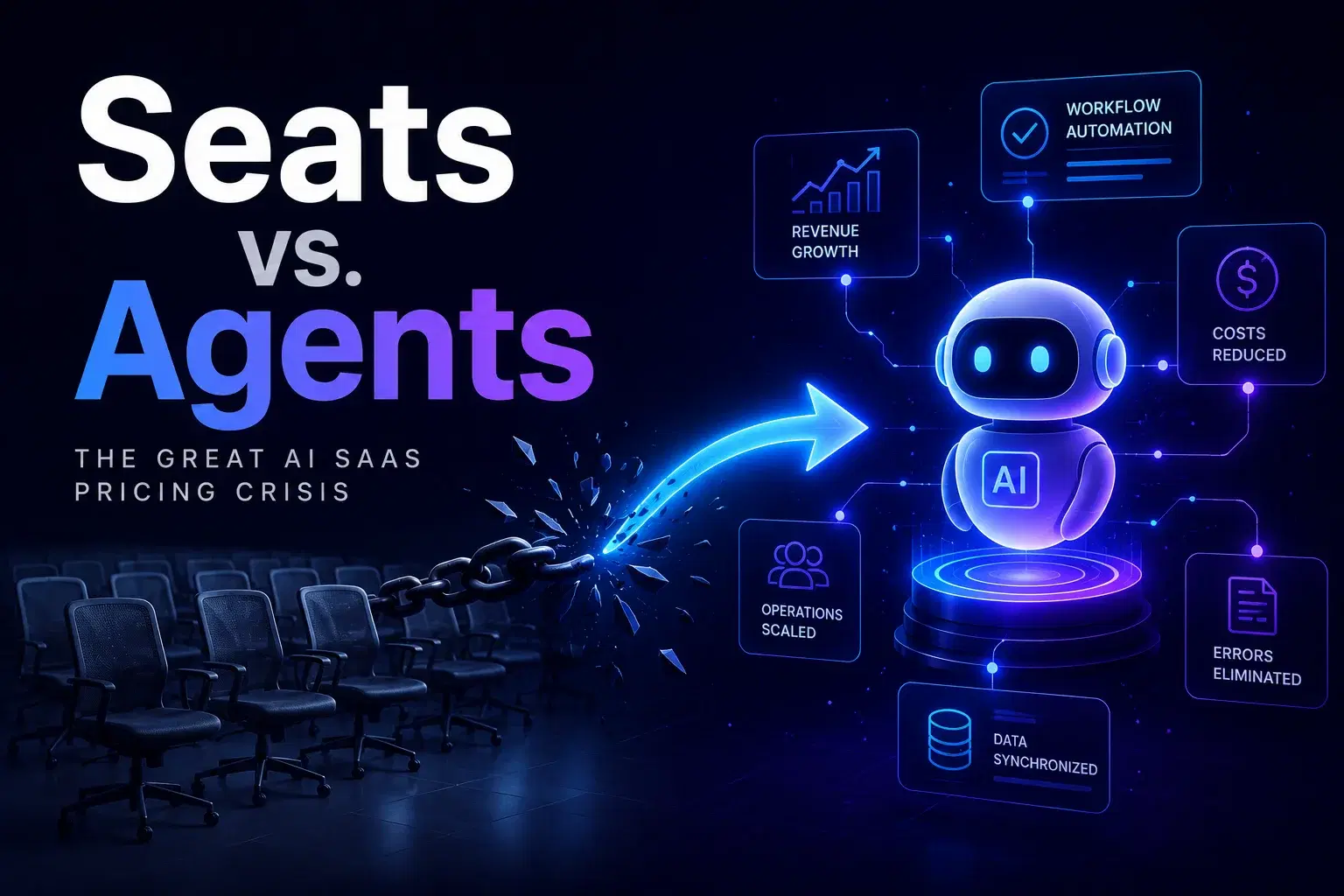
AI agents are breaking the old SaaS pricing equation. When one autonomous workflow can replace a five-person ops squad, founders need pricing models based on usage, outcomes, and value created—not seats.
Related work
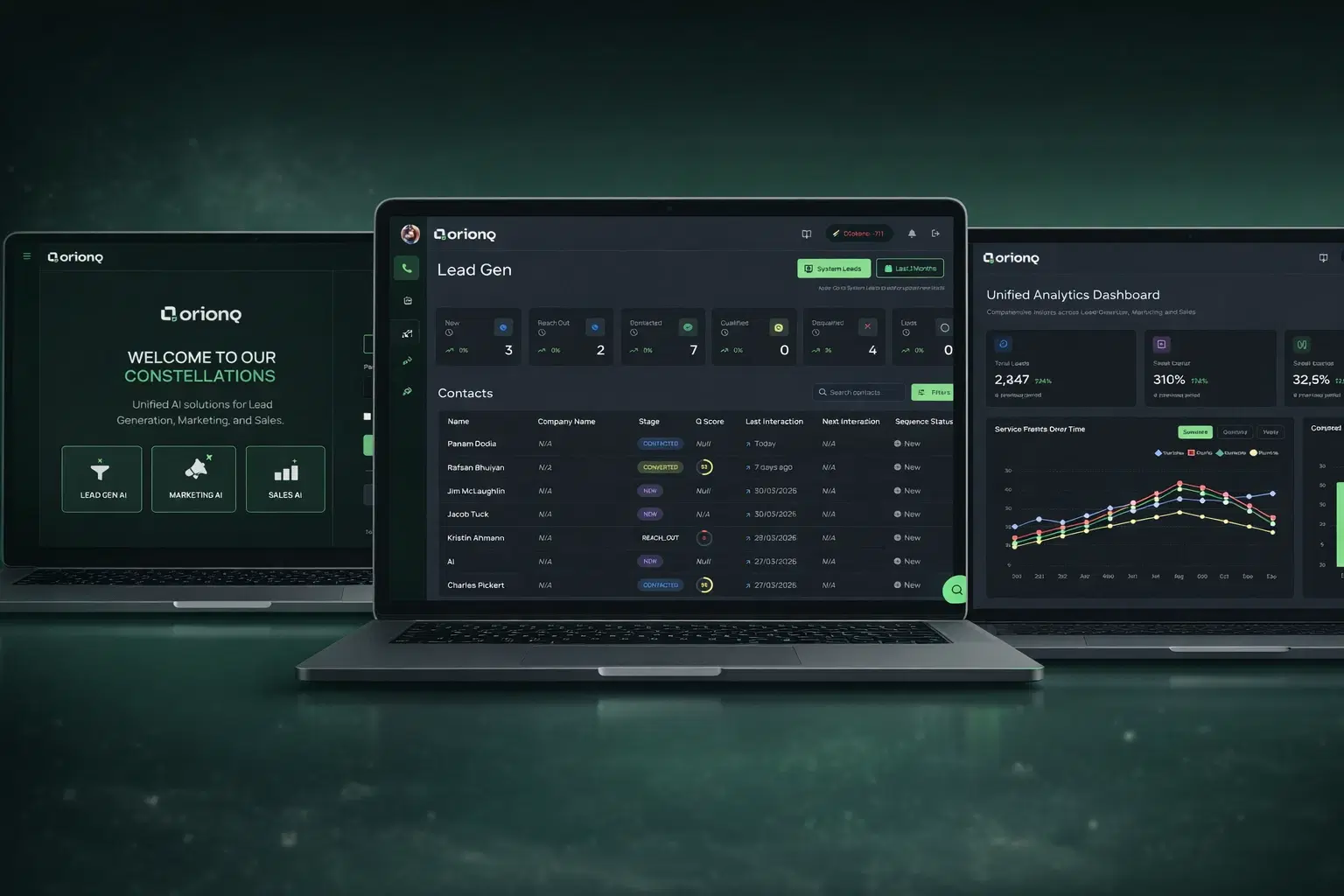
Production builds that connect to this topic—open a case study or jump to our portfolio.


The clearest sign of the AI SaaS evolution is the collapse of traditional seat-based pricing. For decades, SaaS companies grew on a simple equation: more employees equals more licenses equals more revenue. That model made sense when software was a place where humans logged in to click, approve, copy, paste, and manage work manually.
AI agents change the unit economics. If one agent can execute the workload of an entire five-person operations squad in seconds, selling software per seat becomes an act of financial self-sabotage. The product no longer creates value because more people use it. It creates value because work gets completed, errors disappear, cycle times shrink, and revenue leakage is recovered.
The pricing crisis: seats do not measure agentic value
The most successful AI startups launching in 2026 are already moving away from pure seat metrics. They are experimenting with consumption-based frameworks, successful-execution pricing, workflow-volume tiers, and outcome-oriented models. The reason is simple: an autonomous system should be priced against the value it produces, not the number of humans watching it work.
If your agent saves a logistics company $10,000 in shipping errors, charging $50 per user per month is not pricing discipline. It is leaving the value pool for someone else.
| Pricing model | Best fit | Risk to manage |
|---|---|---|
| Seat-based | Collaboration tools where humans remain the primary value driver | Value is capped when automation reduces user count |
| Usage-based | High-volume agent runs, API calls, retrieval, document processing | Customers fear unpredictable bills without strong controls |
| Outcome-based | Clear business results such as recovered revenue, reduced errors, or completed transactions | Attribution must be defensible and auditable |
| Hybrid platform fee + usage | Enterprise AI systems with base infrastructure plus variable activity | Requires transparent metering and renewal education |
Three core mandates for the 2026 AI founder
Enterprise buyers will not keep paying for AI products that look impressive in a demo but collapse under budget review, procurement scrutiny, or operational complexity. To avoid churn, founders need to redesign the product roadmap around three realities.
1. Move from workflows to orchestration
Do not build isolated features. Build control planes. The winning AI SaaS products decouple fast-changing AI models from permanent business logic, permissions, audit trails, and integrations. This lets the platform swap underlying LLMs, routing strategies, and retrieval layers without breaking customer workflows.
- Separate model selection from workflow rules so the product can evolve as model performance and pricing change.
- Treat prompts, tools, policies, and evals as versioned product infrastructure, not scattered implementation details.
- Give admins visibility into what agents did, why they did it, and what systems they touched.
2. Embrace the FinOps shock
Enterprise buyers are terrified of token volatility. Even as model prices fall, total AI consumption can spike when adoption expands across teams and workflows. Early 2026 buying behavior shows the pattern clearly: cheaper tokens do not automatically mean smaller bills. They often unlock more usage, more automation, and more budget anxiety.
Founders who build transparent usage tracking, cost controls, workflow-level metering, and governance directly into the product will win CFO trust faster than teams that hide usage in invoices. AI FinOps is not a back-office feature. It is becoming a core enterprise buying requirement.
3. Build vertical, deep-context systems
Horizontal AI tools are losing differentiation. The alpha is in specialized domain expertise: legal engines that understand court-specific compliance, clinical intelligence systems that account for local healthcare rules, fintech agents that respect KYC/AML workflows, and logistics agents that understand carrier constraints and exception handling.
- Vertical context gives the model better judgment and gives buyers a stronger reason to trust the product.
- Domain-specific workflows create stronger switching costs than generic chat interfaces.
- Compliance, auditability, and terminology become product moats when they are embedded deeply enough.
The pricing architecture founders should test
Most AI SaaS companies should not jump directly from seats to pure outcome pricing. The safer path is a hybrid model: a base platform fee for enterprise access, security, integrations, and support; usage pricing for agent runs or workflow volume; and outcome-based expansion where the value can be measured cleanly.
| Stage | Pricing motion | Why it works |
|---|---|---|
| MVP | Flat monthly pilot fee | Keeps procurement simple while learning usage patterns |
| Early product-market fit | Platform fee + included usage tier | Gives buyers predictability and founders a base revenue floor |
| Scale-up | Usage tiers by workflow volume or successful execution | Aligns revenue with automation depth |
| Enterprise | Hybrid fee + usage + value-share clauses | Captures upside where business outcomes are measurable |
The bottom line
The SaaS-pocalypse is not a death sentence for software. It is a weeding-out process. The world does not need another point solution that requires a human to copy-paste data from one tab to another.
The founders who survive 2026 will be the ones who stop treating AI as a clever assistant and start building it as an autonomous teammate. Pricing, product architecture, governance, and vertical context all need to reflect that shift.
Frequently asked questions
Related articles
Why Most Founders Underestimate...
Why Enterprise Customers Ask for Features You Never Planned (And How to Architect for Them Early)
Enterprise buyers rarely reject SaaS products over core workflow features. Deals stall over compliance, security, and identity infrastructure. Learn how to architect for enterprise readiness from day one.
13 min read · SaaS & Product Engineering
Engineering Decisions That Become Expensive Later
Why Most SaaS Products Become Hard to Scale (And It's Usually Not Because of Traffic)
When software velocity hits a brick wall, founders blame infrastructure. But true scalability bottlenecks are hidden inside your database schemas, hardcoded permissions, and tightly coupled business logic.
14 min read · SaaS & Product Engineering
MVP & Product Architecture
The Hard Parts of Building an MVP: Decisions That Become Expensive Later
We’ve watched dozens of products grow. The catastrophic failures rarely happen because of bad business ideas; they happen because early, unchecked tech decisions trap your velocity right when you land your first enterprise pilot.
14 min read · SaaS & Product Engineering
Vertical Deep-Dives
AI Agents for Customer Success: Reducing Churn and Scaling Retention
Customer success teams are buried in reactive work. AI agents that predict churn, automate health scoring, and draft proactive outreach let CSMs focus on the relationships and decisions that only humans can handle.
13 min read · SaaS & Product Engineering
Strategic Foundations
AI-First MVP Development: How Startups Ship Agentic Products in 8 Weeks
Eight weeks is enough to validate an AI product hypothesis—if you make the right scope decisions from day one. This guide covers the architecture, sprint model, and production gates that separate shipped MVPs from eternal prototypes.
13 min read · SaaS & Product Engineering
Decision Framework
AI SaaS vs. Custom Development: Which Path to Digitalization?
Build-everything and buy-everything are both extremes. Most enterprises need a portfolio: SaaS for commodity surfaces, custom for defensible workflows and regulated data.
13 min read · SaaS & Product Engineering
Plan your next build with us
Book a working session to review workflows, integrations, or AI architecture—or send a message and we'll respond within one business day.